
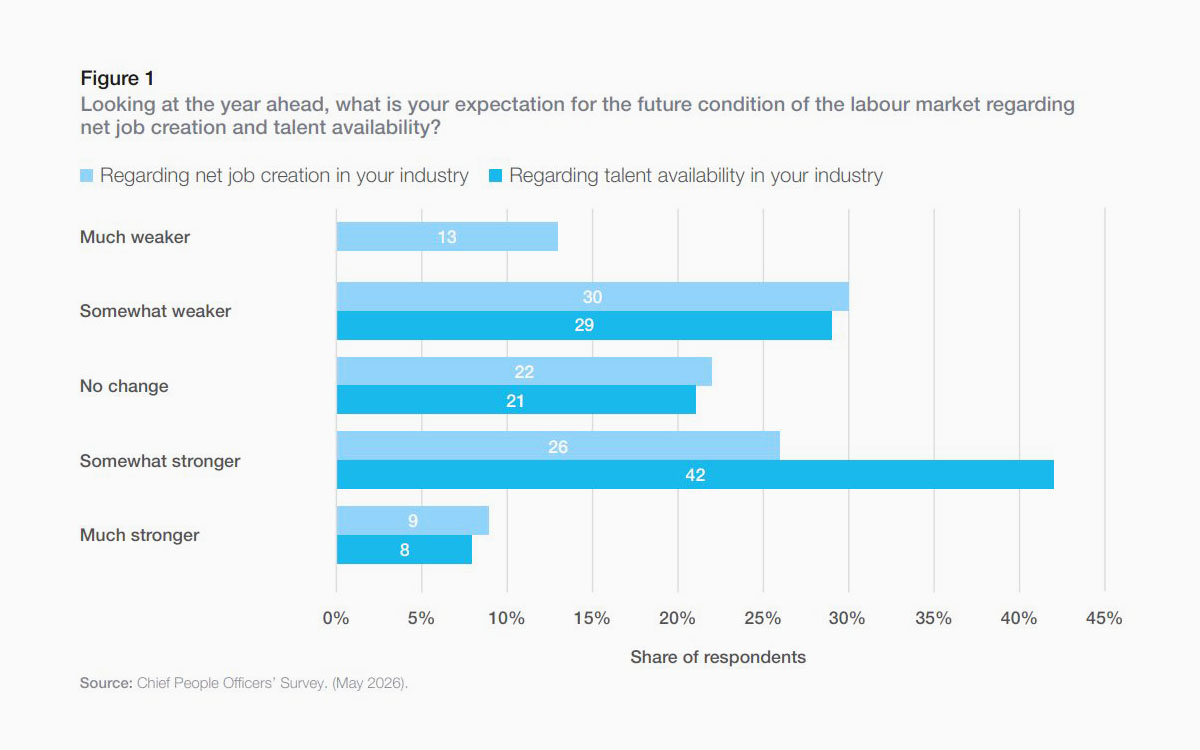
Many organisations are discovering that hiring alone does not solve capability problems.
In many cases, the challenge is not simply finding people. It is identifying where critical skills already exist, deploying talent effectively, and redesigning work as business conditions continue to change.
In Japan especially, companies are managing demographic decline, labour shortages, and capability renewal simultaneously, while also trying to maintain long-term workforce continuity. That pressure is forcing organisations to rethink how work is structured, how talent is developed, and how capability is sustained over time.
This is why workforce strategy is becoming more closely tied to organisational structure, AI adoption, mobility, and capability development.
The Chief People Outlook by World Economic Forum reflects how strongly geopolitical and economic conditions are influencing HR decisions.
Visa restrictions, demographic pressure, cybersecurity concerns, and changing labour regulations are directly affecting workforce planning across markets. For multinational organisations, talent strategy now requires far greater regional coordination and operational flexibility.
What is particularly notable is where organisations are focusing their efforts for the year ahead:
➡️ Reviewing organisational structure and job design to improve agility and workforce alignment.
➡️ Expanding the range of talent acquisition options, including freelancers, rather than limiting ourselves to permanent employees.
➡️ Expanding upskilling and reskilling programmes to close capability gaps internally instead of relying only on external hiring.
➡️ Supporting workforce deployment of AI and process automation by redesigning workflows and redefining roles alongside technology adoption.
These are not separate HR initiatives. They are increasingly connected to business continuity, operational resilience and long-term competitiveness.