
An increasing number of profitable companies in Japan are reducing headcount.
For decades, workforce reductions were tied to distress. Today, financially strong firms are using them to rebalance capability, redirect investment, and respond to technological change.
This points to a deeper recalibration inside Japanese organisations.
The pressure is coming from multiple directions.
⚓Digital transformation is accelerating, especially in industrial sectors.
⚓Capital markets are demanding stronger returns and accountability.
⚓While, demographic constraints continue to tighten the talent pool.
In this environment, workforce composition becomes a strategic lever. Roles are being redefined around skills and contribution, and experience is being reassessed as business models shift toward software, data, and services.
This creates a complex tension.
Japan still operates within a system shaped by long-term employment and strong expectations of stability. When profitable companies introduce voluntary retirement programs, the impact extends beyond cost. It affects trust, identity, and the relationship between employer and employee.
Execution therefore becomes critical.
Organisations that manage this well invest heavily in transition. Transparent communication, credible reskilling pathways, and meaningful support for redeployment all play a role. Without this, workforce actions risk weakening engagement at a time when capability and commitment are both essential.
For HR leaders, this moment calls for closer alignment between workforce decisions and business direction.
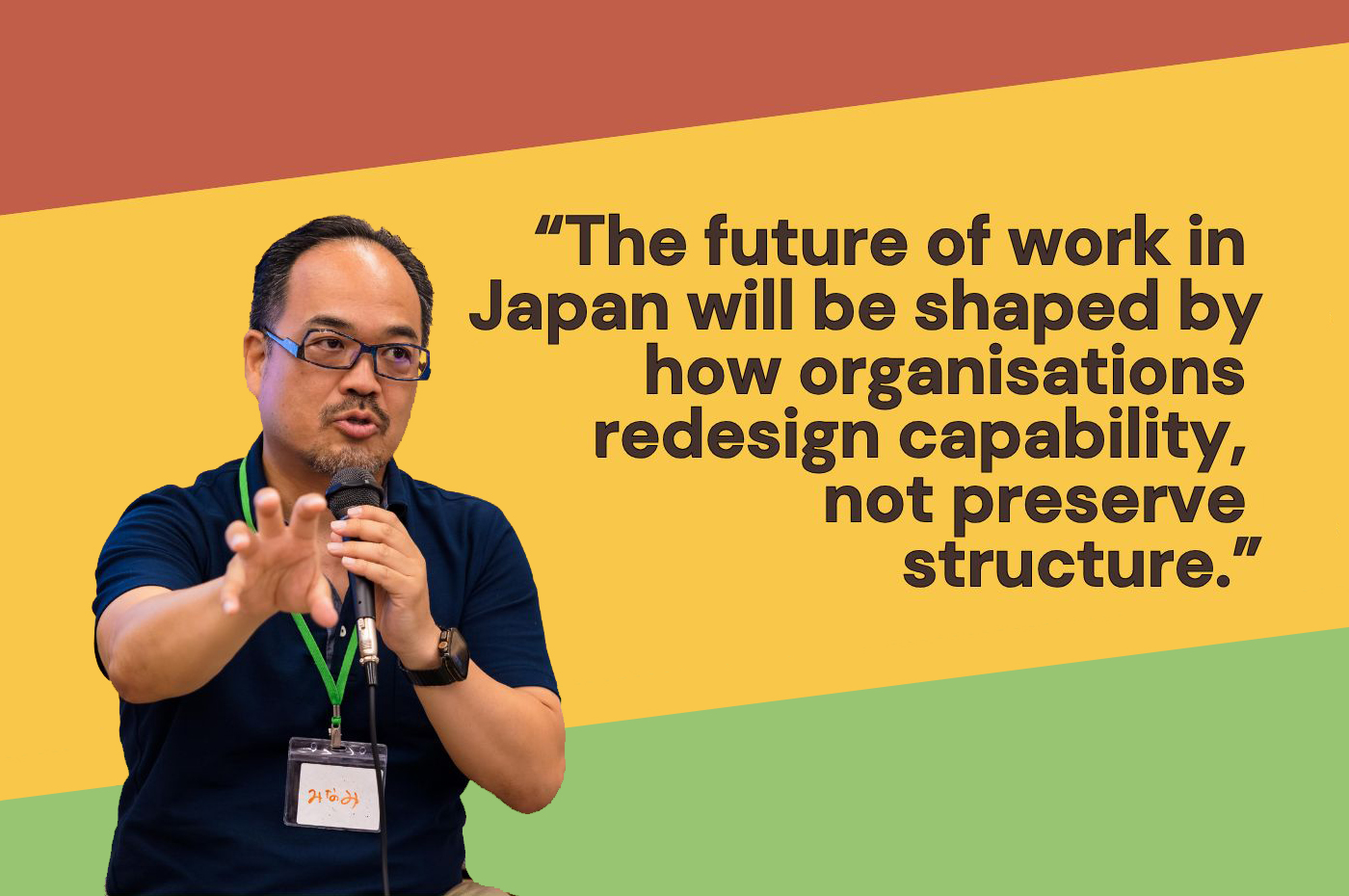
Japan is entering a phase where workforce design is being actively rewritten.
Handled with discipline and care, it creates an opportunity to build organisations that are more adaptive and more intentional in how they invest in people.