
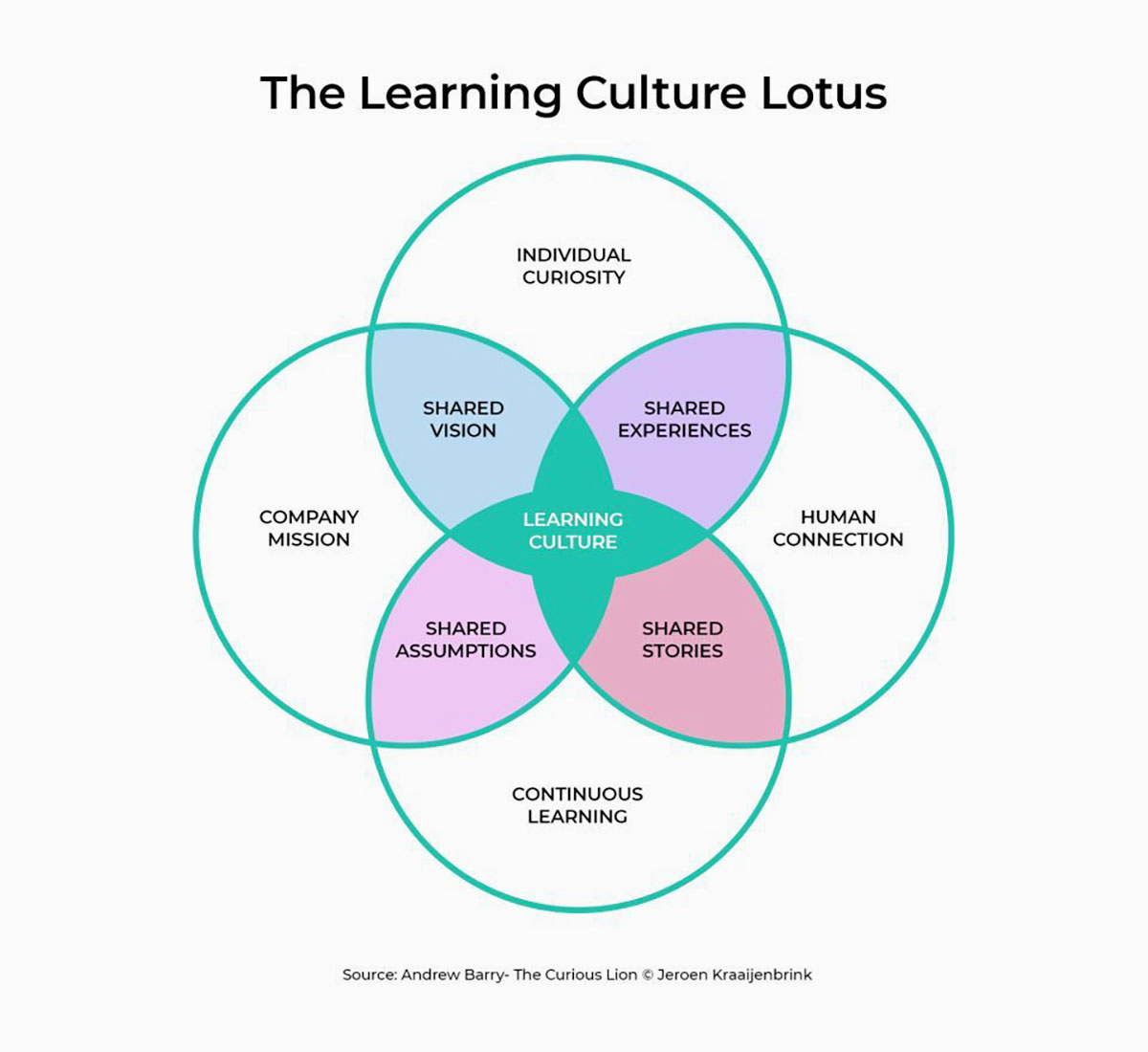
This framework surfaces an important reality: learning culture is shaped less by programmes and more by how organisations are designed to learn.
From an HR perspective, this is a useful shift. Many organisations invest in learning initiatives, but the impact depends on whether the underlying conditions support them.
Here’s how I think about it:
• Curiosity needs direction
Encouraging people to learn is important, but without clarity on where the organisation is heading, effort becomes fragmented. Learning should connect to business priorities.
• Mission needs challenge
A strong sense of purpose aligns people, but it should also invite questioning. Without that, organisations risk reinforcing existing thinking rather than evolving it.
• Connection drives application
Learning becomes meaningful when ideas are discussed, tested and refined with others. Without this, knowledge remains individual and rarely translates into action.
• Continuity builds capability
One-off learning moments have limited impact. Capability develops when learning is embedded into everyday work and reinforced over time.
In my view, the real challenge is not introducing more learning. It is ensuring these elements work together consistently.
When they do, learning becomes part of how decisions are made, how problems are solved and how organisations adapt.
That is what turns learning into a capability, not an activity.
Image Credits: Jeroen Kraaijenbrink