
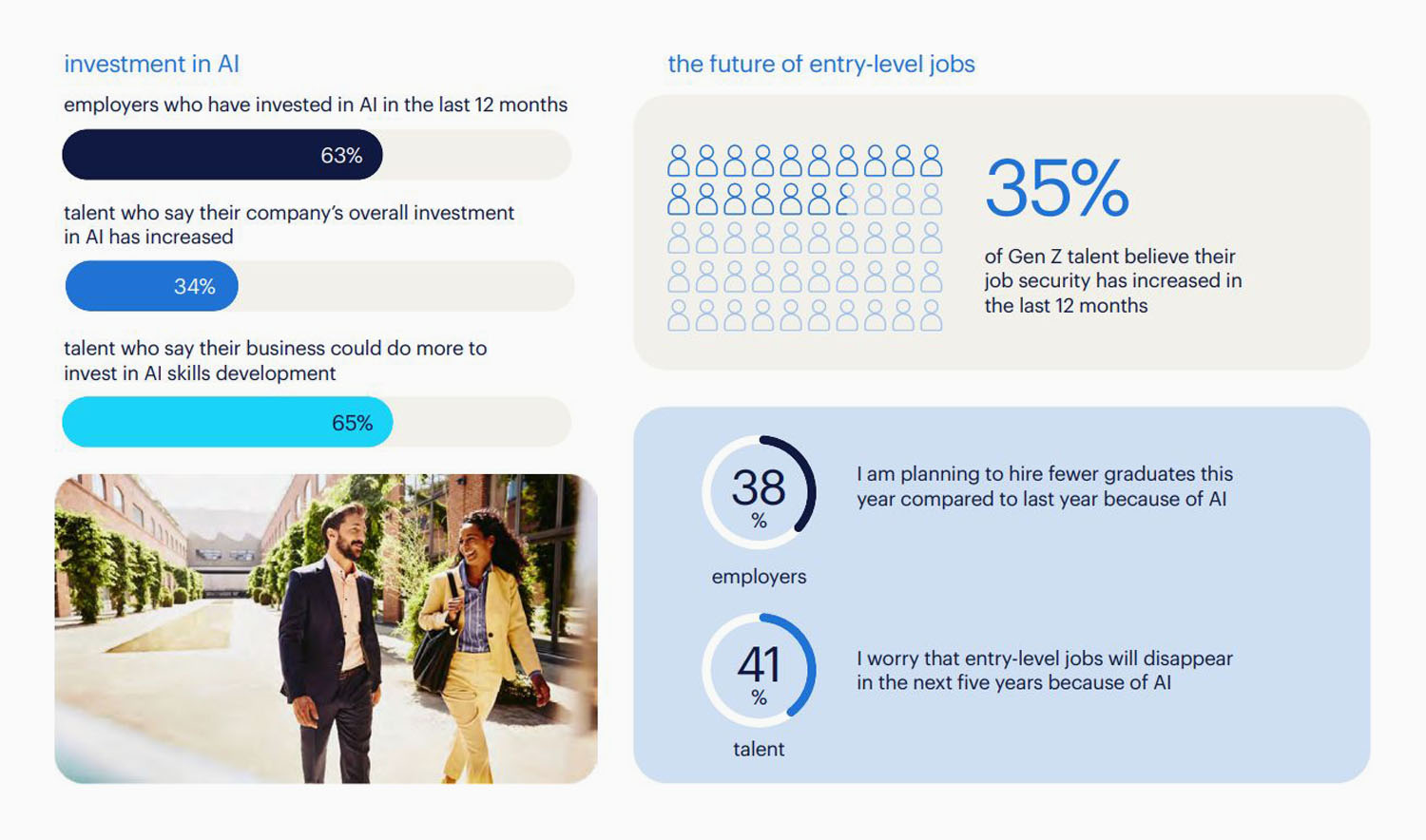
I recently read the Randstad Workmonitor 2026, which highlights several developments in how people view work today.
The report points to a growing gap between how organisations see the future and how employees feel about it. While most employers remain optimistic about growth, only about half of employees share that confidence.
The findings highlight changing expectations around pay, career development, flexibility and technology. Many organisations remain confident about growth, yet employee sentiment appears more cautious in several areas.
The Japan insights are particularly thought-provoking.
Compared with the global average, employees in Japan appear less optimistic about their organisation’s outlook and their readiness to use new technologies. Trust in leadership and colleagues also scores lower than global benchmarks.
At the same time, priorities around retention are clear. Work–life balance plays an especially important role when employees in Japan consider staying in their current roles.
Managers also emerge as a key stabilising force. In an environment shaped by economic uncertainty and rapid technological change, strong manager–employee relationships continue to influence how teams collaborate and perform.
For organisations operating in Japan, it’s quite clear that business confidence alone does not translate into workforce confidence.
Leadership, trust and day-to-day employee experience still shape how people feel about the future of work inside their organisations.