
Employee engagement is starting to mirror the underlying design of work inside organisations.
Gallup’s latest data puts global engagement at 20%, declining for the second consecutive year. Much of this drop is driven by managers—the group expected to connect strategy, people, and execution.
That tension shows up even more distinctly in Japan.
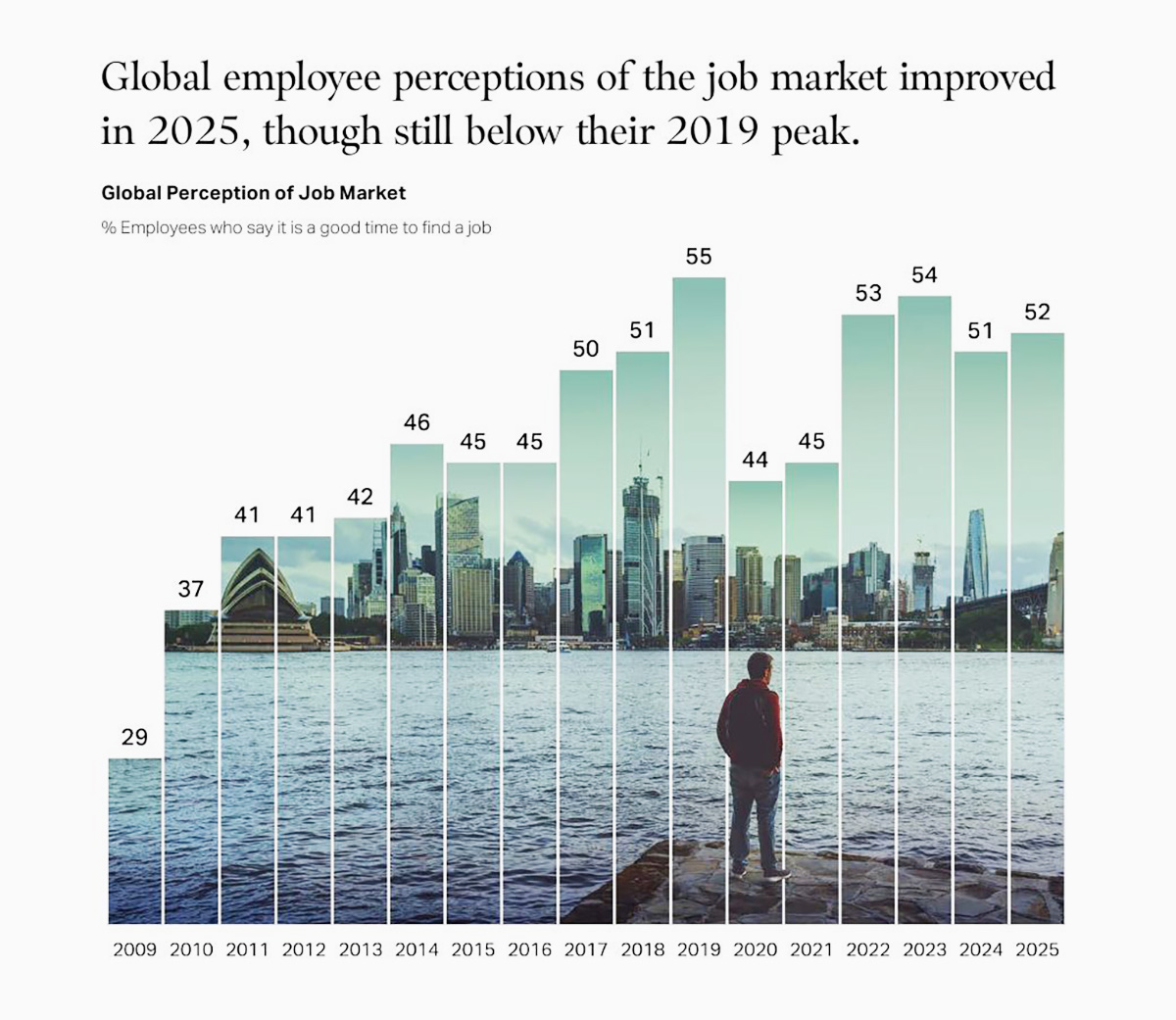
Engagement levels remain low, while confidence in the job market has increased significantly. More people feel they have options, yet fewer feel a strong connection to their current roles.
That combination has consequences.
It points to a workforce that is increasingly willing to move, while organisations face growing difficulty building continuity and depth of capability.
Looking at this more closely, a few implications stand out:
🔹 Work design is shaping engagement outcomes
How roles are structured, how progress is experienced and how contribution is recognised all influence whether people feel connected to what they do.
🔹 Managers are carrying a heavier load
They are expected to lead teams, deliver results, and integrate new ways of working, including AI. Without stronger support, this layer becomes stretched.
🔹 Speed is increasing faster than meaning
As technology improves efficiency, roles can become fragmented. When ownership and context weaken, connection to work follows.
🔹 Mobility is outpacing attachment
In Japan, rising job confidence alongside low engagement suggests movement without long-term commitment. This has implications for capability building over time.
The broader takeaway: engagement reflects alignment between how work is structured, how people are led, and how value is created.
Organisations that strengthen this alignment will be better positioned to sustain both performance and workforce stability.