
Burnout today is increasingly driven by sustained pace, constant urgency, and rising expectations.
A recent piece from Forbes reinforces a reality many HR leaders already recognize: productivity tools may lift output, but they also accelerate pressure, availability demands and emotional strain.
The article highlights three leadership practices that matter right now:
1. Recognize burnout early
Burnout builds quietly. It appears through withdrawal, reduced initiative, shorter communication, or fewer new ideas long before performance declines. HR plays a critical role in helping managers notice these signals and intervene early.
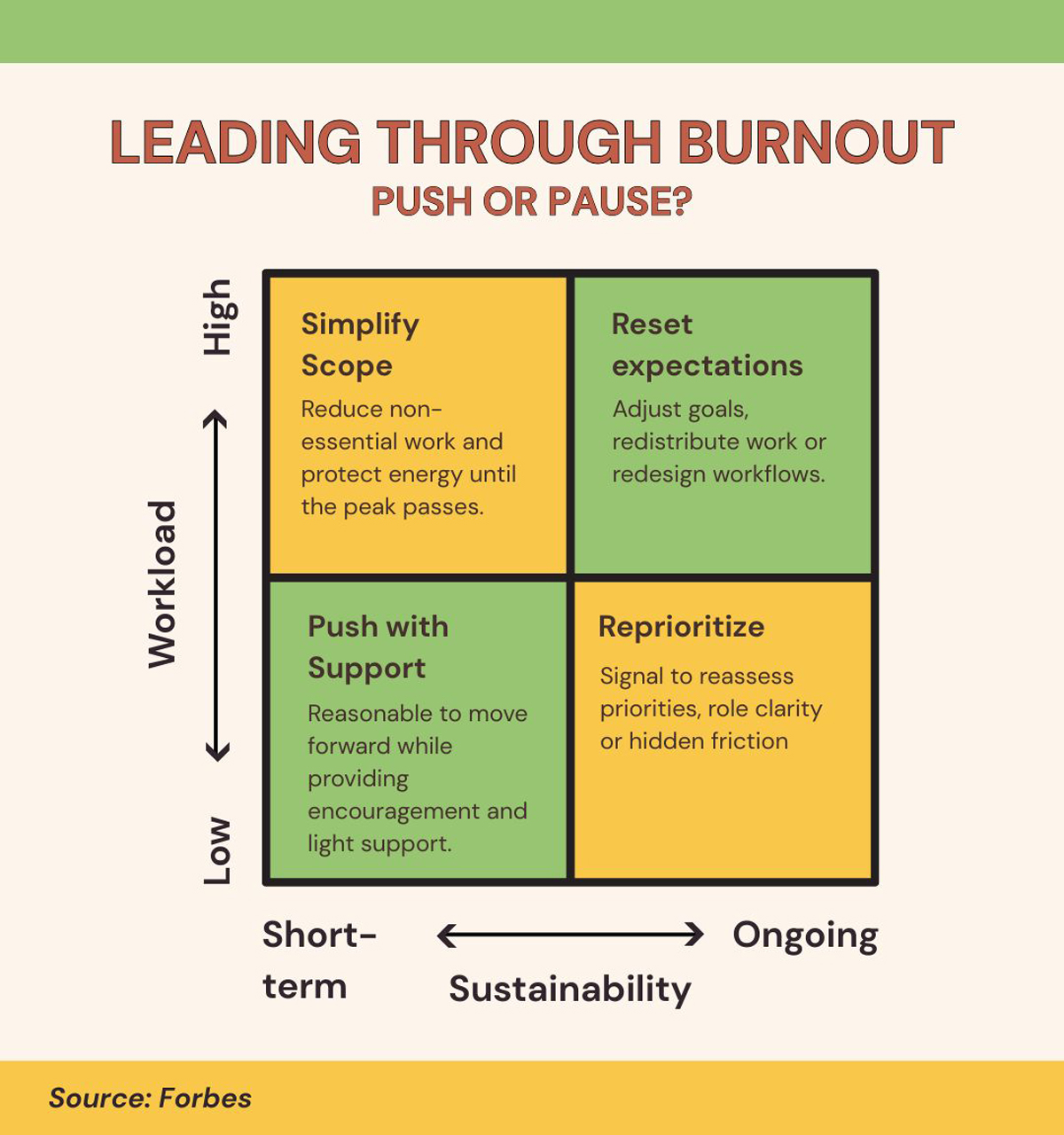
2. Make intentional push–pause decisions
This is not about lowering standards. It’s about assessing capacity, duration, and control. Sometimes the right response is reprioritizing work, removing low-value tasks, or resetting expectations so people can deliver sustainably.
3. Design work for recovery
Burnout isn’t solved by asking individuals to be more resilient. It’s prevented through better systems: protected focus time, realistic stretch assignments, built-in pauses after intense periods, and leaders who visibly model boundaries.
When organizations help leaders spot early signals, make deliberate push–pause calls and build recovery into everyday workflows, they protect both business results and people.