
Japan is slowly but steadily changing how it thinks about disability employment.
New government targets are pushing companies to do more. The statutory employment rate will rise to 2.7% by 2026, and support programs are expanding to help both employers and jobseekers find better matches.
The numbers show real progress. Private-sector employment of persons with disabilities has increased from 1.46% in 2004 to 2.41% today. Training systems, digital assistive tools and structured job-matching services are making participation more realistic than ever.
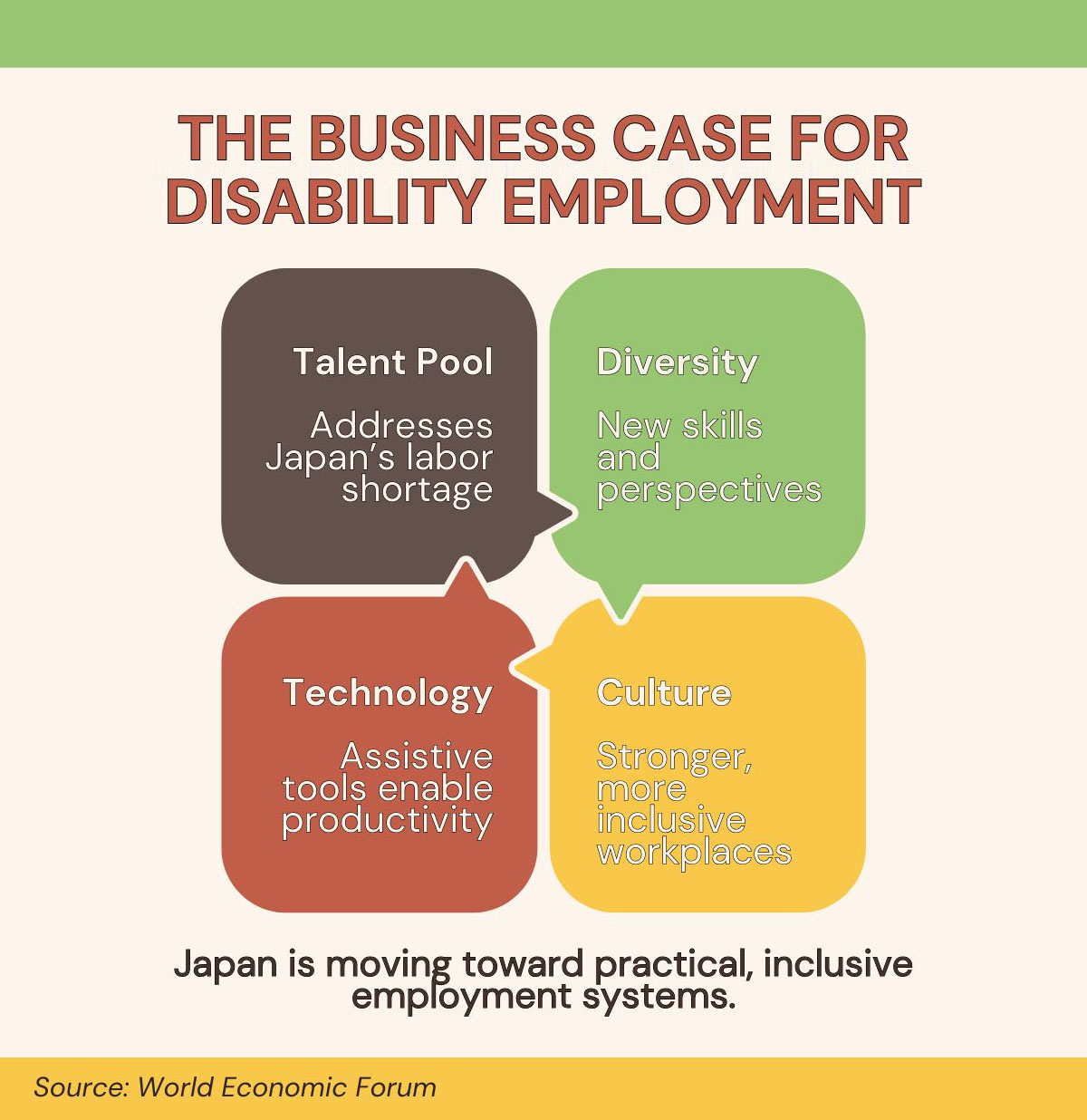
Technology is playing a major role in this shift.
Many employees who have hearing disabilities now rely on real-time captioning by Google Meet or Microsoft Teams in meetings. Text-to-speech features support employees with low vision or mobility issues. Cephable empowers people with mobility and motor challenges to use voice or gesture controls.
This matters not only from a social perspective, but also a business one.
Japan is facing severe labor shortages. Over half of companies already report difficulty finding full-time employees. Bringing more people with disabilities into the workforce is not just about compliance or CSR. It is becoming part of the solution to a shrinking talent pool.
What is encouraging is the shift in approach:
– More flexible career pathways instead of rigid roles
– Better workplace adjustments and assistive technology
– Employer support platforms and specialized coordinators
– Evaluation systems designed around capability, not limitation
Several Japanese companies are already showing what is possible. They are proving that inclusive hiring can strengthen teams, improve culture and open access to overlooked talent.
The broader lesson is simple. Inclusion is not a social add-on. It is a practical strategy for building sustainable organizations in a country with growing demographic challenges.